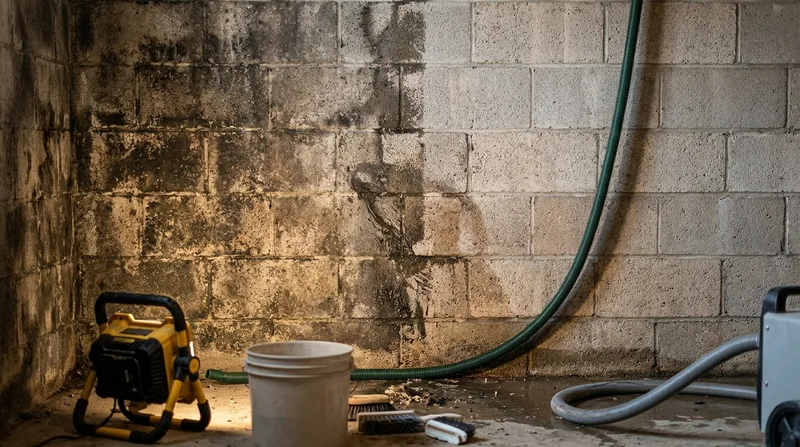



Boulder's heavy clay and shale soils swell after every storm, and the freeze-thaw swings along the Flatirons push water against foundations all winter. When that moisture finds a way into a Whittier bungalow or a Martin Acres ranch, mold follows within days. Basement Mold Remediation in Boulder means removing the growth and fixing the moisture source so it does not come back. We work below grade only: basement walls, slabs, window wells, and the drain tile that is supposed to keep them dry. If you have a musty smell, efflorescence on the block, or damp framing after a hailstorm or a Boulder Creek high-water event, call Boulder Waterproofing at (970) 670-8043 for a free basement inspection.
Why Basement Mold Remediation Matters in Boulder's Clay and Foothill Terrain
Most mold calls here trace back to a moisture source, not to a one-time spill. Boulder sits on expansive glacial clay that holds water against the footing, and foothill homes in Gunbarrel and Niwot shed fast runoff down the slope after a storm. Older houses in Mapleton Hill and Goss-Grove often have stone or early block lower levels with no drain tile at all, so any water that enters stays in the wall. We treat mold as a building-materials problem: find the moisture, dry the assembly, remove the growth, and correct the path the water uses.
- Hydrostatic pressure pushes water through hairline cracks and porous block, keeping the wall cavity wet long enough for mold to colonize.
- Failed sump pumps and clogged window well drains leave standing water on the slab after heavy rain.
- Missing or degraded vapor barriers let ground moisture migrate into finished basement framing and insulation.
- Downspouts that dump next to the foundation and grading that slopes back toward the house feed the same wet cycle.
Each of these points to a fixable moisture path, and the remediation plan has to address that path or the mold returns with the next wet season.
Key info: A foursquare near Chautauqua had efflorescence on the lower block and a musty smell in a finished room. The cause was a failed sump pump and a downspout discharging two feet from the wall, not a wall crack. We replaced the pump, extended the discharge, and remediated the affected drywall and framing.
Boulder County regulates construction and demolition debris and mold remediation waste handling, so confirm disposal requirements with the Boulder County government before a large removal.
How We Remediate a Wet Basement in Boulder, Step by Step
Our process starts with moisture diagnostics, not with a sprayer. We map the wet areas with a moisture meter, check the sump basin and discharge line, and look at the grading and window wells on the uphill side. Then we fix the water path and clean the affected materials in the right order, so the remediation is not undone by an active leak.
- We contain the work area with plastic sheeting and negative air pressure to keep spores out of the rest of the house.
- We remove porous materials that cannot be dried, such as wet drywall, insulation, and saturated carpet, and bag them for disposal.
- We HEPA-vacuum and treat framing, block, and slab surfaces with an antimicrobial cleaner, then dry the assembly with dehumidifiers and air movers.
- We correct the moisture source: sump pump replacement, window well drainage, crack injection, or an interior perimeter drain depending on what the inspection shows.
- We verify with moisture readings before closing the area and give you a written summary of what was done.
When the source is hydrostatic pressure rather than a single crack, an interior drain tile system is often the better answer than exterior excavation, and we say so plainly.
Key info: In a 1960s split-level in Martin Acres, the musty smell came from a wet rim area above a partly finished basement. The moisture source was a clogged window well drain on the uphill side. Cleaning the drain and re-grading the well stopped the water, and we remediated the damp framing and insulation behind the finished wall.
Remediation Approaches We Use in Boulder Basements
The right approach depends on what is wet and why. A single damp patch on a block wall is a different job from a finished basement that flooded after a storm. The table below shows how we match the method to the condition we find.
| Approach | Description | Best for |
|---|---|---|
| Surface treatment and HEPA cleaning | Containment, HEPA vacuuming, and antimicrobial treatment of framing, block, and slab. | Small areas of surface growth with a known, correctable moisture source. |
| Material removal and rebuild | Removal of saturated drywall, insulation, and carpet, followed by drying and reconstruction. | Finished basements that took on water after a sump failure or storm. |
| Moisture source correction | Sump pump replacement, crack injection, window well drainage, or drain tile repair. | Recurring growth tied to hydrostatic pressure or a failed drainage component. |
| Vapor barrier and wall sealing | Vapor barrier on the slab and wall sealing to cut ongoing moisture migration. | Damp block walls and slabs with no active leak but persistent humidity. |
We recommend the least invasive method that actually solves the moisture problem, and we tell you when simple crack sealing is enough.
Basement Mold Remediation Cost in Boulder: What to Expect
Most basement mold remediation jobs in Boulder start at $1,500 for a contained area with a straightforward moisture fix. The price moves with the size of the affected area, whether finished materials have to come out, and what the moisture correction requires. A sump pump replacement is a modest add; an interior perimeter drain is a larger project. We give you a written scope before any work starts. See our full pricing overview for detail, and get two or three estimates so you can compare scope, not just the number.
Basement Mold Remediation Near Me: How to Vet a Contractor Near Boulder
Ask for the license and insurance certificate before anyone walks into your basement. Confirm the contractor carries general liability and workers' compensation, and ask whether they handle mold remediation in-house or subcontract it. Get two or three written estimates with the moisture correction spelled out, and ask for references from Boulder jobs similar to yours. Permits are commonly required for structural foundation repair, egress window cutting, and work altering drainage or the sanitary connection of a sump discharge, and thresholds vary by jurisdiction. Always verify with the local building department. If your home is in an HOA, check the rules on exterior drainage changes before work begins. Reach us through our contact page to schedule an inspection.
Basement Mold Remediation in Boulder: Pricing Guide
| Service | Price | Details |
|---|---|---|
| Contained surface remediation | Starting at $1,500 | Includes containment, HEPA cleaning, antimicrobial treatment, and drying of a small affected area. |
| Finished basement remediation | Starting at $3,500 | Includes removal of wet drywall and insulation, drying, and reconstruction of the affected wall sections. |
| Remediation with moisture source correction | On estimate | Priced after inspection when sump pump, drain tile, or crack injection work is needed to stop the water. |
| Travel | Included | In Boulder and surrounding areas, no separate call-out or mileage fee. |
| Estimate | Free | Response within 24h at (970) 670-8043, no obligation to book. |
Indicative pricing, the exact cost depends on square footage, finish, and site access. Free personalized estimate within 24h at (970) 670-8043.


