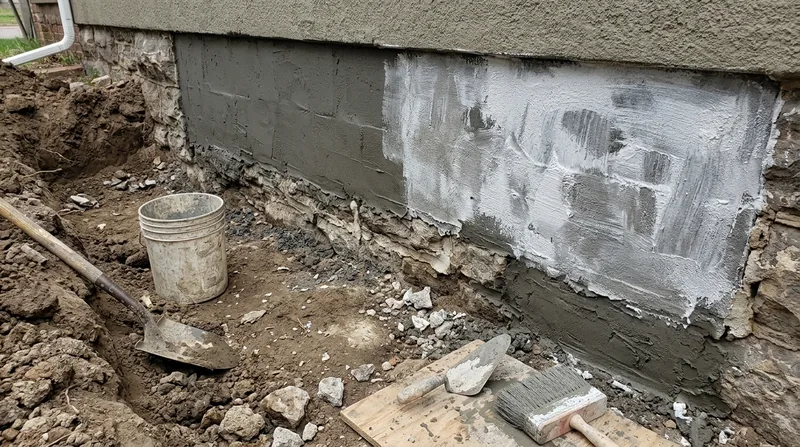



Foundation Waterproofing in Boulder is not the same job it is in Omaha or Cleveland. Most of the housing stock here sits on low foundations, and full basements are the exception rather than the rule, so the work leans hard on parging, crack injection, window well drainage and footing drains wherever a lower level exists. The soil is heavy glacial clay and shale that swells when it gets wet and shrinks when it dries, and that movement opens cracks in poured walls and works mortar joints loose in the stone and early block lower levels around Whittier, Mapleton Hill and Goss-Grove. Add the fast runoff the foothills shed after a storm and the hard flooding Boulder Creek and its tributaries deliver in heavy rain, and a foundation that looked fine in June can be weeping at the cove joint by August. We handle the below-grade side of that equation: diagnosing where the water is actually coming from and fixing it at the wall or the footing, not painting over the symptom. If you are already seeing water on the floor, start with our basement waterproofing service page.
Why Foundation Waterproofing Matters on Boulder's Clay and Shale
Boulder County's expansive clay holds water against the foundation long after the rain stops, and the freeze-thaw swings under sharp mountain sun work every joint in the wall. Hydrostatic pressure is what turns a hairline crack into a wet basement floor, and it is the reason simple crack sealing sometimes fails on the first big storm. The failure mode that dominates here is wall seepage and cove joint leakage after sustained rain or rapid snowmelt, not a rising water table.
- Hillside and foothill homes in Gunbarrel and Niwot take fast runoff off the slopes, and their walkout and daylight basements collect it at the rear wall.
- 1950s and 1960s ranches in Martin Acres and the east side often have partly finished basements with original drain tile that has long since silted shut.
- Pre-1940 stone and early block walls in Mapleton Hill need period-appropriate parging and repointing, not a modern membrane slapped over rubble.
- Newer subdivisions in Longmont, Lafayette and Superior with poured full basements show shrinkage cracks that need epoxy or polyurethane injection before they widen.
Every one of those cases gets a different fix, and matching the method to the foundation type is the whole job. The City of Boulder's building permit resources are the place to confirm what your specific scope requires before work starts.
Key info: A 1920s foursquare in Goss-Grove with a stone lower level and a 2015 walkout in Niwot are two completely different waterproofing jobs. The stone wall gets repointed and parged with a breathable mix; the poured walkout gets injection ports and a dimple board drainage plane.
How We Diagnose and Waterproof a Boulder Foundation
We start below grade with a free inspection, because the source of the water decides the method. Efflorescence on the wall means moisture is moving through the concrete, not leaking through a single crack, and that changes the recommendation from injection to a crystalline or membrane treatment plus drainage correction. We check the grading and downspout extensions first, since a surprising number of wet basements in Boulder are fed by a downspout dumping water two feet from the wall.
- We walk the interior and exterior, map crack locations, and check for a bowing wall or horizontal cracking that signals pressure rather than shrinkage.
- We test the drain tile and sump basin, and confirm whether the existing system discharges properly through a check valve and discharge line.
- We match the repair to the wall: epoxy injection for structural cracks that have gone dormant, polyurethane injection for active leaks that need to flex with the wall.
- We correct drainage where the pressure is coming from, with footing drain work, window well repair, or an interior perimeter drain if exterior excavation is not practical.
- We finish with wall sealing or a vapor barrier where the goal is moisture control and prevention of mold growth on stored materials.
If the diagnosis points to a failed footing drain rather than a wall crack, the right answer is usually our drain tile repair and replacement service. On a Martin Acres ranch we pulled last spring, the original clay tile had collapsed under the driveway and the sump pump was cycling every twenty minutes; replacing the tile run and adding a battery backup fixed it without touching the finished wall.
Key info: On a Mapleton Hill stone foundation, we repoint with a lime-based mortar and parge with a breathable mix. A hard Portland parge traps moisture in the rubble core and spalls the face off within two winters.
Waterproofing Methods We Match to Boulder Foundations
The table below is how we sort the options in the field. The method follows the wall type and the water source, never the other way around.
| Approach | Description | Best for |
|---|---|---|
| Epoxy injection | Ports drilled along the crack, resin injected under pressure to bond the concrete back together. | Dormant shrinkage and settlement cracks in poured walls. |
| Polyurethane injection | Flexible foam injected into active leaks, expanding to fill the crack and seal it wet. | Actively weeping cracks and cove joint leaks after rain. |
| Parging and repointing | Breathable mortar coat over stone and early block to close joints and shed water. | Pre-1940 stone and block lower levels in Whittier and Mapleton Hill. |
| Membrane or crystalline treatment | Waterproof membrane or crystalline coating applied to the wall face to stop seepage. | Poured walls with broad dampness and efflorescence. |
| Drainage correction | Footing drain, window well, or interior perimeter drain work to relieve hydrostatic pressure. | Wet floors and walls where the water source is the soil, not the concrete. |
When the pressure is the real problem, an interior drain tile system often beats exterior excavation on cost and disruption, especially on homes where the driveway or a mature tree sits tight to the wall.
Foundation Waterproofing Cost in Boulder: What to Expect
Foundation waterproofing in Boulder starts at $3,500, and that figure covers a straightforward scope: crack injection on a poured wall, parging and sealing on a small stone foundation, or a window well and grading correction. Most of the jobs we quote land above that starting point, and the drivers are predictable. Access is the big one, since a foundation wall behind a finished patio or a mature blue spruce costs more to reach than an open side yard. Wall length and foundation type matter too: stone and early block take more labor than poured concrete, and a full interior perimeter drain with a sump basin is a bigger scope than injection alone.
Getting two or three estimates is smart, not disloyal. Ask each contractor to explain what is causing the water and why their method fits, and compare the scopes line by line rather than the bottom line. A quote that is half the others usually means crack sealing only, with the drainage problem left in place. Our full pricing overview breaks down how each scope is built.
Hiring a Waterproofing Contractor Near Me in Boulder: What to Check
Ask for the license and insurance certificate before anyone walks your basement, and confirm the coverage is current for the crew that will actually be on site. Call two recent references with the same foundation type as yours, stone to stone or poured to poured, and ask whether the basement stayed dry through the following spring melt. Confirm who pulls the permit when structural repair or drainage alteration is involved, and defer to the local building department on thresholds, since rules vary by jurisdiction.
Get the scope in writing: method, wall locations, discharge point, and what happens if the crew finds a bowing wall behind the finished surface. A transferable warranty on the work is standard for us, and we put the terms in the contract rather than in a verbal promise. If your home sits in an HOA, check the architectural review rules before exterior excavation or discharge line changes. Reach out through our contact page to schedule the free inspection.
Foundation Waterproofing in Boulder: Pricing Guide
| Service | Price | Details |
|---|---|---|
| Crack injection (epoxy or polyurethane) | Starting at $3,500 | Includes port drilling, injection and sealing on accessible poured wall cracks, priced by crack length. |
| Parging and wall sealing | Starting at $3,500 | Breathable parge and seal coat on stone or block, priced by wall area and surface condition. |
| Drainage correction with sump | On estimate | Interior perimeter drain, sump basin and discharge line, scoped after the free inspection confirms the source. |
| Structural repair (bowing wall) | On estimate | Carbon fiber straps or wall anchors require an on-site look at crack width and wall deflection before pricing. |
| Travel | Included | In Boulder and surrounding areas, no separate call-out or mileage fee. |
| Estimate | Free | Response within 24h at (970) 670-8043, no obligation to book. |
Indicative pricing, the exact cost depends on square footage, finish, and site access. Free personalized estimate within 24h at (970) 670-8043.


